Short answer: a longevity resort in Indonesia is built in one of four proven scales — a compact wellness club from about $1.2M on 1,000–1,200 m² of land, a boutique retreat around $5M on ~3,000 m², an urban members club around $8M, or a flagship resort campus around $16M on a hectare. The budget buys the full turnkey program: architecture, tropical-grade engineering, thermal and cold-water circuits, longevity diagnostics, equipment and opening. Land is separate.
This guide walks through each format, what it contains, how long it takes, and in which order decisions should be made. It is written for two readers: the owner who wants to build and run a longevity business, and the investor comparing wellness infrastructure to other real-asset positions.
Why longevity, and why Indonesia
The wellness economy has shifted from pampering to measurable recovery: guests now expect cold plunges, proper saunas, and increasingly a diagnostics layer — VO2 max, HRV, body composition, biological age. The Global Wellness Institute values the global wellness economy at over $5.6 trillion, and the longevity segment is its most visible new category.
Indonesia sits in a rare position inside that trend. Bali alone hosts one of the world's densest wellness-tourism flows, the affluent domestic market in Jakarta and Surabaya is growing, and yet premium longevity infrastructure barely exists outside five-star hotel spas. The supply gap is the opportunity — and it is why we engineered our four signature concepts for this market specifically.
The four formats compared
| Format | Land | Core program | Indicative budget | Timeline |
|---|---|---|---|---|
| Compact wellness club | 1,000–1,200 m² | 8-seat glass sauna, hot + cold contrast pools, recovery lounge, reception | $1.2M | 6–9 months |
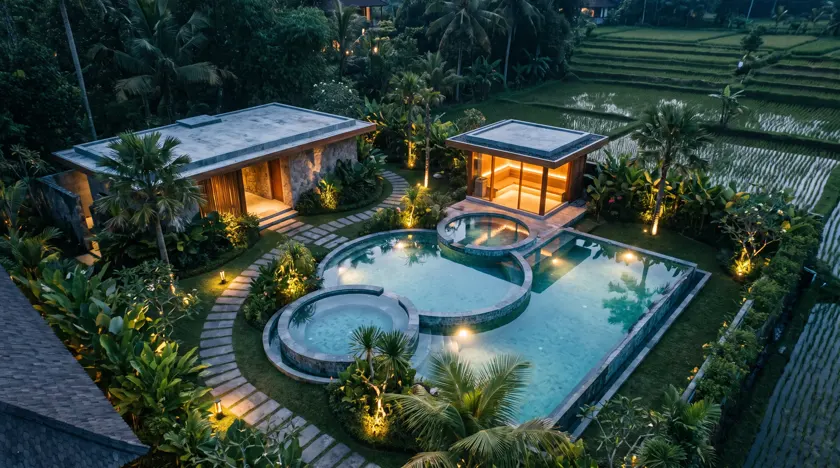
| Boutique retreat | ~3,000 m² | Full thermal circuit, spa pavilions, diagnostics room, café, gardens | $5M | 12–18 months |
| Urban longevity club | City building, 2 floors | Thermal suite, pools, diagnostics clinic, studios, members lounge | $8M | 12–18 months |
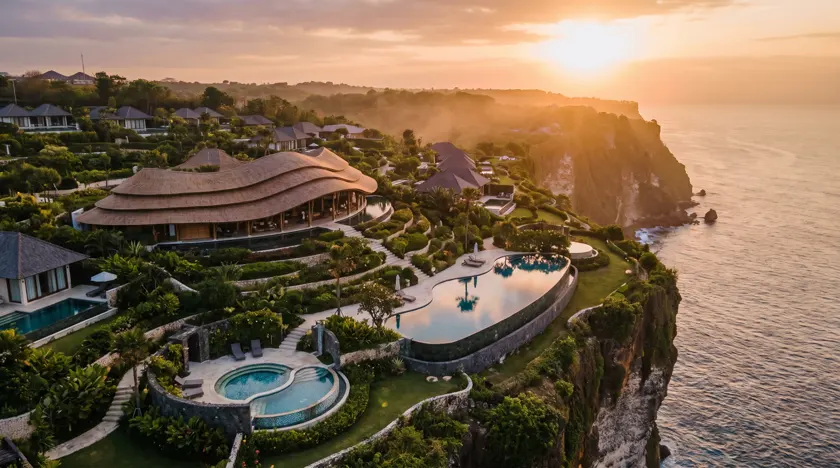
| Flagship resort campus | ~1 hectare | Grand spa, villas, infinity pool, clinic-grade diagnostics, residences | $16M | 18–30 months |
The budgets above are indicative turnkey figures — they cover design, construction, equipment, installation and opening support, and are refined into an exact bill of quantities at the design stage. What moves them: location logistics, finish level, equipment origin (Asian vs European premium brands), and how much diagnostics you install on day one.
The compact club: the scalable entry
The $1.2M format is deliberately small: one exceptional sauna with panoramic glass, a disciplined hot/cold contrast circuit, and a recovery lounge that makes people stay for the third round. Its economics rest on memberships and repeat visits rather than one-off tourists — and its real power is replication. Open one, prove the unit economics, then build the second and third on the same drawings. That is why we engineered it as a repeatable kit rather than a one-off building.
The boutique retreat: a destination
At ~3,000 m² the program changes: guests come for half a day, not ninety minutes. The thermal circuit expands (sauna, steam, multiple pools), treatment pavilions appear, and a diagnostics room turns first-time visitors into program clients. Food becomes part of revenue. In Ubud-class locations this format also feeds on retreat groups booked months ahead.
The urban club: longevity as membership
In Jakarta or Surabaya the land equation flips: you buy floors, not gardens. The $8M urban format packs a full thermal suite, contrast pools and a genuine diagnostics clinic into two floors, wrapped in membership economics. The diagnostics layer is what justifies premium pricing — members track VO2 max, HRV and biological age quarter over quarter, which is precisely what keeps them from cancelling.
The flagship: a longevity resort proper
The $16M campus is the full thesis: villas and residences around a grand spa with a hydrotherapy hall, an infinity pool on the cliff edge, and clinic-grade diagnostics running structured programs. It competes internationally — with Swiss clinics and Mexican destination spas — at Indonesian build costs and in a location people already dream of flying to.
What the tropics demand from the building
Every one of these formats lives or dies on engineering that never shows up in renders: ventilation sized per zone, vapour barriers behind every heated room, drainage with real falls, condensate management for cold rooms in 80% ambient humidity. Indonesia punishes shortcuts within one rainy season. This is why we insist the MEP package is designed before finishes are chosen — the full argument is in our guide to what it really costs to build a wellness center in Indonesia.
Honest note: the four Ethelia concepts are original designs by our team — engineered and costed, shown as concept renders, not photographs of finished buildings. That honesty is also flexibility: each one can still be adapted to your land, market and budget before a single wall goes up.
The right order of decisions
Most failed wellness projects fail in the first three decisions, not the last hundred. The sequence that works:
1. Format before land. Decide the business first — club, retreat, urban or resort. Buying land first usually means forcing a format onto a plot it doesn't fit.
2. Flow before architecture. Unit counts, session lengths and the client journey determine the building — not the other way round. We model utilization at 65–80% before drawing walls.
3. Engineering before finishes. The MEP package is the slow, unforgiving part. Stone can be chosen in a week; air handling cannot be retrofitted cheaply.
4. Diagnostics from day one. The measurement layer — VO2 max, HRV, body composition — is what separates a longevity business from a spa. Plan the room and the data flow in phase one, even if some devices arrive in phase two.
How we work — and what it costs to start
Our engagement path is built so you only pay when you receive documents you keep. The first two conversations are free: a discovery call about your idea, land and budget, then an idea consultation where we match you to a format and frame a realistic range. The paid steps that follow — concept consultation with layout sketches, then the full design package with bill of quantities — each produce materials that are yours whoever you build with. Construction runs under one contract with 40/40/20 staged payments. The full ladder is on our rates page.
Thinking about a longevity project — as an owner or an investor?
Start with the free discovery call. We'll tell you honestly whether your idea, land and budget line up — and which of the four formats fits.
Book the free call on WhatsAppFrequently asked questions
How much does it cost to build a longevity resort in Indonesia?
Depends on scale: a compact wellness club starts around $1.2M turnkey, a boutique retreat around $5M, an urban longevity club around $8M, and a flagship clifftop resort with villas and clinic-grade diagnostics around $16M. These are indicative budgets excluding land, refined into an exact bill of quantities at the design stage.
How much land does a longevity resort need?
A compact club fits on 1,000–1,200 m². A boutique retreat needs around 3,000 m². A full resort campus with villas typically needs about one hectare.
How long does a longevity resort take to build?
A compact club: roughly 6–9 months from design start to opening. A boutique retreat: 12–18 months. A flagship campus: 18–30 months including permits, phased construction and commissioning.
Related reading: Wellness real estate in Indonesia · Why Indonesia is the next longevity market · Investing in wellness complexes